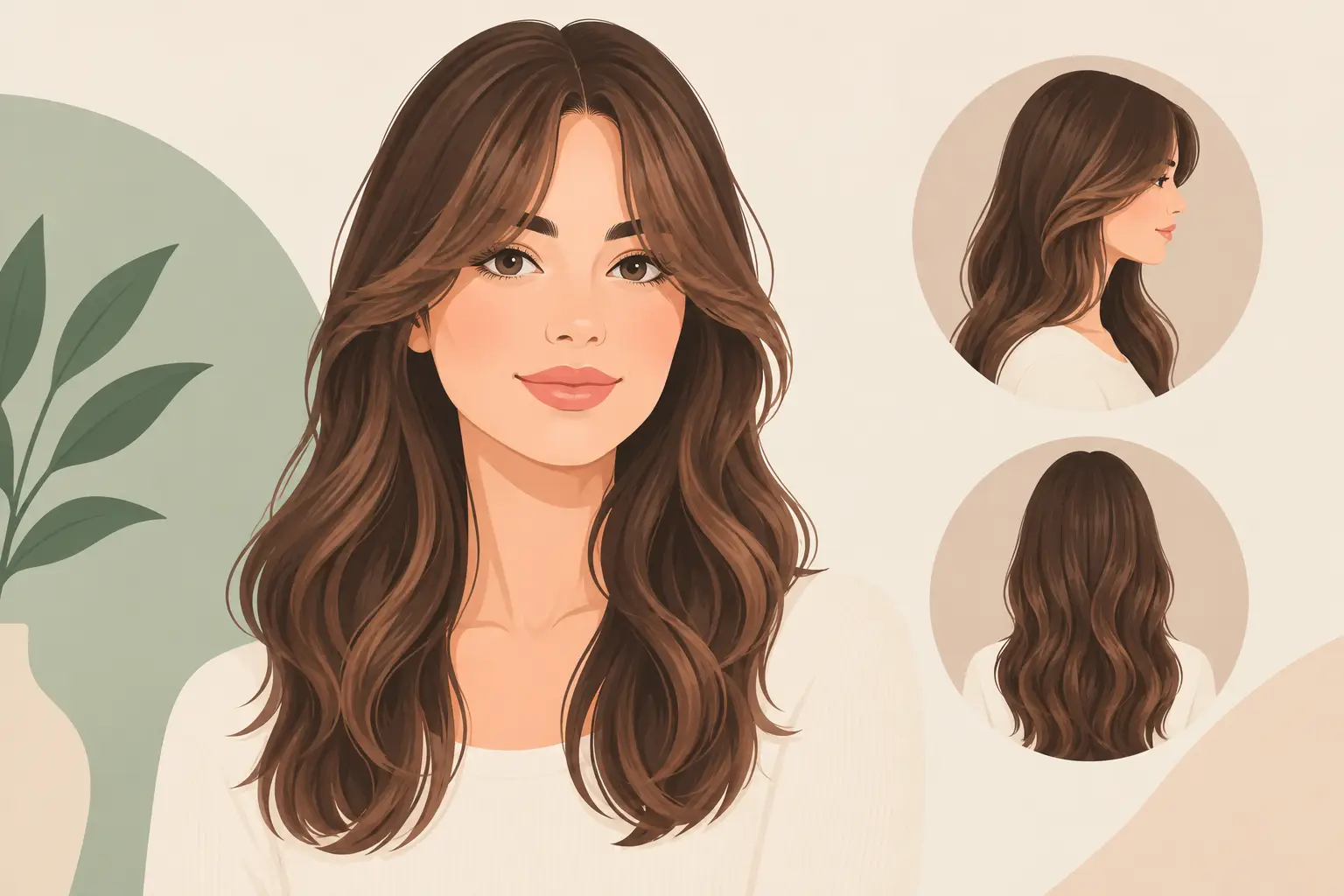
A great fringe should not feel like something you have to fight every morning. The appeal of curtain bangs is their softness: they part through the centre or just off-centre, sweep away from the face and blend into the rest of your haircut. Done well, they bring attention to the eyes and cheekbones while giving your style movement, shape and an effortlessly polished finish.
They are often described as low-maintenance, but that is only partly true. Curtain bangs are more forgiving than a blunt fringe as they grow out, yet the best result still relies on the right length, weight and styling routine for your hair. A personalised salon consultation makes all the difference between a fringe that enhances your features and one that never quite sits where you want it to.
What Makes Curtain Bangs So Flattering?
Unlike a straight-across fringe, curtain bangs are cut shorter towards the centre and gradually lengthen around the temples. This creates an open, face-framing shape that can be tailored from subtle and wispy to full, sculpted and distinctly retro.
Their versatility is the reason they continue to be a salon favourite. They can soften a strong jawline, add dimension around the face, make fine hair appear more styled and give long layers a fresh focal point without committing to a dramatic overall haircut. They also work beautifully with balayage, foils and lived-in colour, as the lighter pieces around the face can emphasise the movement of the fringe.
The key is not copying the exact fringe you have saved on your mobile. The most flattering version will be designed around your face shape, your natural parting, hair density and the amount of styling time you genuinely want to give it.
Are Curtain Bangs Right for Your Hair Type?
Curtain bangs can suit many hair types, but they need a different approach depending on texture and density. Straight hair tends to show the shape of the cut clearly, so precision is essential. A little root lift and a smooth bend through the ends will stop the fringe from falling flat.
On naturally wavy hair, curtain bangs can look beautifully relaxed and airy. The cut needs enough length to account for shrinkage as the hair dries, particularly around the centre of the forehead. A skilled stylist will also consider how your wave pattern changes from one side of your parting to the other.
Curly hair can wear curtain bangs too, with a soft curly fringe creating a confident, modern finish. This is not a cut to rush. Curl pattern, spring factor and the way you style your hair at home all need to be considered before the first section is trimmed.
Fine hair may benefit from a lighter, narrower fringe that preserves fullness through the front. Very thick hair can carry a more substantial curtain shape, although careful internal weight removal may be needed so it does not become heavy or triangular. If your hair is prone to frizz, a smoothing service such as keratin or Nanoplastia may make daily styling more manageable, but the fringe should always be assessed separately to maintain natural movement.
Face Shape Is a Starting Point, Not a Rule
Curtain bangs are often recommended for oval, heart and longer face shapes, but there is no single formula. On a rounder face, a longer fringe that begins below the cheekbones can create elegant vertical lines. On a square face, softly feathered ends can balance stronger angles. A heart-shaped face may suit a fuller centre with delicate tapering near the temples.
What matters most is placement. The shortest point of the fringe directs attention, so even a small adjustment can change the whole effect. This is where an in-salon consultation is valuable: your stylist can assess your features in motion, not simply against a face-shape chart.
How to Ask for Curtain Bangs at Your Appointment
Bring inspiration, but be ready to discuss your everyday routine. Images help communicate the mood you love, whether that is a 1970s-inspired blow-dry, a soft French finish or a more modern, undone texture. They do not always reveal the model’s hair density, extensions, styling tools or professional finish behind the scenes.
Your stylist should ask where you naturally part your hair, whether you wear glasses, how often you heat-style and whether you regularly tie your hair back. These details influence the length and density of your fringe. A centre-parted curtain fringe may sound ideal, for example, but a soft off-centre part may sit more naturally if you have a strong cowlick at the hairline.
It is also worth discussing the rest of your cut. Curtain bangs look most intentional when they connect into face-framing layers. A blunt one-length haircut can still wear them, but some subtle shaping usually helps the fringe flow rather than appear separate from the rest of the hair.
At RHair & Beauty, a tailored consultation is the foundation of every beautiful transformation. The goal is not simply to give you a current look, but to create a cut that feels like you and performs beautifully between appointments.
Styling Curtain Bangs Without the Morning Battle
Most curtain bangs benefit from being styled while damp, especially at the roots. If you let them dry in whichever direction they choose, they may split too widely, cling to the forehead or develop an awkward bend.
Start with a small amount of lightweight styling product or heat protectant, then blow-dry the fringe from side to side using your hands or a small paddle brush. This resets the natural growth pattern and helps prevent a hard parting. Once the roots are nearly dry, use a round brush to direct each side away from the face, giving the ends a gentle curve rather than a tight curl.
A medium round brush usually creates the most wearable result. A very small brush can make the fringe look too bouncy, while a large brush may not give enough control at the roots. Finish with cool air to set the shape, then use a tiny amount of flexible hairspray or texture spray if your fringe tends to separate.
For a quicker second-day refresh, lightly mist the fringe with water and re-blow-dry the roots. Dry shampoo can help with oil, but using too much can leave the hair dull or stiff. Because the fringe sits against the forehead, it often needs more frequent washing than the rest of your hair. Washing just the front section at the basin is a simple way to restore that freshly styled softness.
The Maintenance Behind an Effortless Fringe
Curtain bangs grow out more gracefully than many fringe styles, but they still need regular attention. Most clients benefit from a fringe tidy every three to six weeks, depending on how short the centre is cut and how quickly their hair grows. Leaving it too long can make the shape lose its lift and fall into the eyes.
Avoid trimming them at home after one frustrating morning. Fringe hair is easy to overcorrect, particularly when it is wet or pulled tight. A few millimetres can turn an elegant face frame into a much shorter statement than you intended.
Product choice matters as well. Heavy oils, rich masks and thick creams can make the fringe look separated or greasy when applied too close to the roots. Keep nourishing treatments through the mid-lengths and ends, and choose a lighter styling product for the front. If you colour your hair, a professional toner or gloss can also keep face-framing highlights bright and refined, enhancing the dimension around your fringe.
When Curtain Bangs May Not Be the Best Choice
A curtain fringe is not automatically the right answer for every lifestyle. If you rarely use a hairdryer, work out daily without wanting to refresh your hair afterwards, or strongly dislike hair around your face, longer face-framing layers may offer a similar softness with less upkeep.
They can also be challenging during very humid weather if your hair reacts quickly to moisture. That does not mean you have to avoid them, but it may mean choosing a longer version, embracing a more textured finish or committing to the right anti-frizz preparation. The best haircut works with your real routine, not an idealised one.
The most beautiful curtain bangs have a little movement, a considered shape and enough flexibility to suit the way you live. Choose a version designed for your texture and styling habits, then give it a few thoughtful minutes each morning. That small ritual can turn a simple fringe into the detail that makes your whole look feel beautifully finished.

