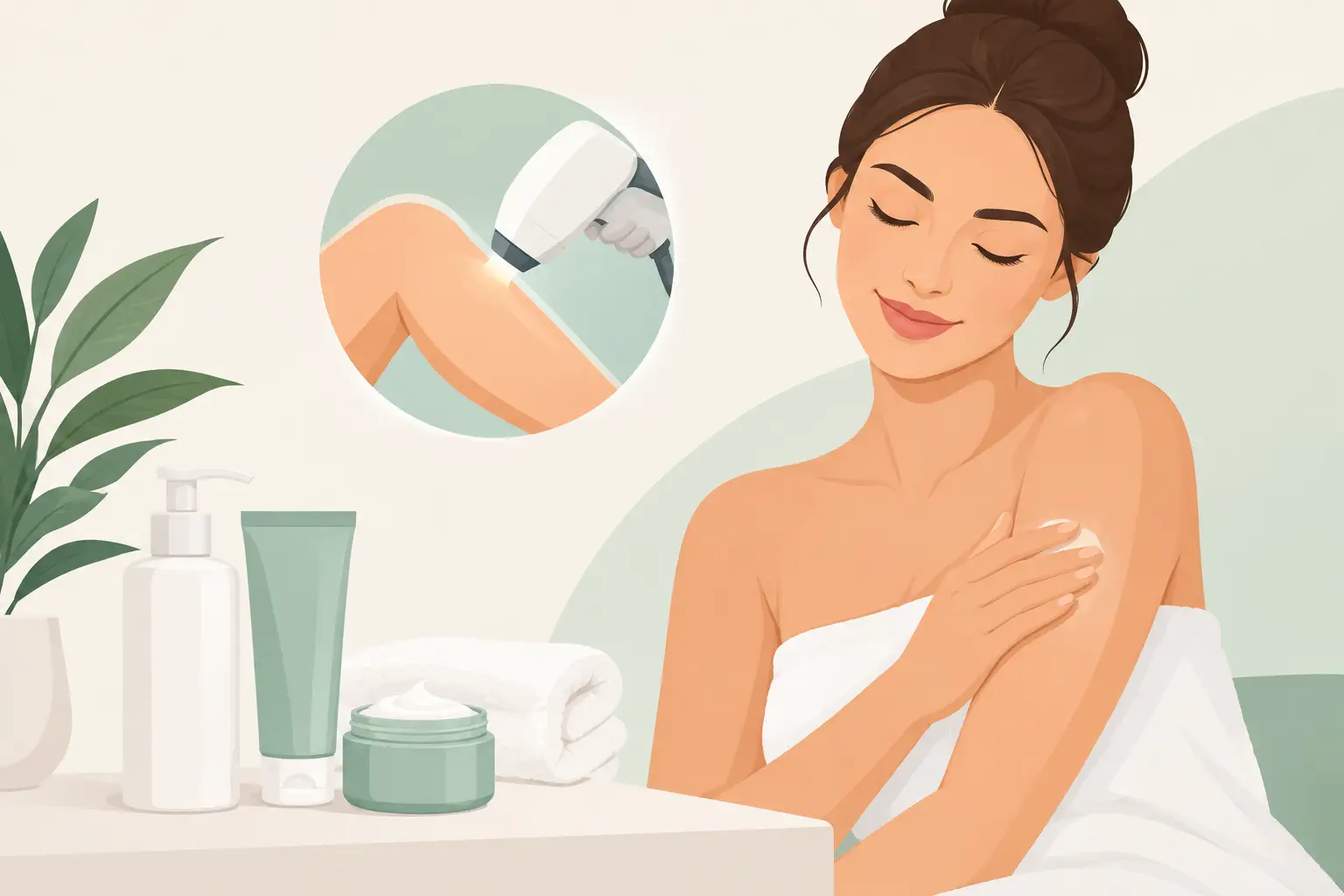
A little warmth and redness after a laser appointment can be completely normal, particularly on areas such as the underarms, bikini line or face. Thoughtful laser hair removal aftercare is what helps that temporary sensitivity settle beautifully, while protecting your skin and supporting the smooth, long-lasting result you are working towards.
Laser treatments are precise, but your skin still needs a gentle recovery window. The goal is not to overload it with products or hide every sign of redness. It is to keep the area cool, clean and protected while your skin returns to its usual balance.
Your laser hair removal aftercare in the first 24 hours
Your treated skin may feel similar to mild sunburn immediately after your appointment. You might also notice small red bumps around the follicles, known as perifollicular oedema. This is often a short-lived sign that the laser has effectively targeted the hair follicle.
For the rest of the day, treat the area with care. Wear loose, breathable clothing where possible, especially after treating the legs, underarms or bikini area. Friction, tight activewear and synthetic fabrics can make sensitive skin feel more irritated than it needs to.
A cool compress can be wonderfully soothing. Use a clean, soft cloth dampened with cool water, or wrap a cold pack in a towel before placing it lightly over the area. Do not apply ice directly to the skin, as this can cause further irritation.
Keep your shower lukewarm and brief. Hot water, steam rooms, saunas and heated spa baths all increase heat in the skin, which may prolong redness and discomfort. If your treatment was on the face, it is generally best to skip make-up for the remainder of the day unless your laser professional has advised otherwise.
Keep heat, sweat and friction to a minimum
For at least 24 to 48 hours, put intense exercise on pause. A high-energy gym session, hot yoga class or long run can raise your body temperature and introduce sweat and friction to freshly treated skin. That can leave follicles feeling itchy or more reactive.
The same principle applies to hot showers, saunas, steam rooms and spa baths. A gentle walk is usually fine, but listen to your skin. If it still feels warm or looks flushed, give it another day before returning to your usual routine.
Swimming deserves a little patience, too. Chlorine, saltwater and lake water can be irritating when the skin barrier is temporarily sensitive. Waiting until visible redness has settled is the more comfortable choice.
Sun protection is not optional
In Sydney, UV exposure can be strong even when the day does not feel particularly hot. After laser hair removal, treated skin is more vulnerable to pigmentation changes if it is exposed to the sun. This matters for every skin tone and every treatment area, from the upper lip to the legs.
Avoid direct sun exposure on the area while it is recovering. If the area cannot be covered, use a broad-spectrum SPF 50+ sunscreen once the skin feels calm and intact, and reapply it as directed on the product label. A hat, sleeves or a light cover-up offer another helpful layer of protection.
Tanning – whether from sunlight, tanning beds or self-tanning products – can complicate your laser plan. A tan changes the contrast between hair and skin, which can affect how your clinician approaches treatment and may increase the risk of skin sensitivity. Be open about any recent sun exposure at your next appointment so your treatment can be tailored safely.
Choose gentle skincare, not more skincare
After treatment, less is often more. Use a mild cleanser and a simple, fragrance-free moisturiser if the area feels dry or tight. Avoid rubbing the skin dry with a towel. Instead, pat gently and let your skin settle.
For several days, avoid exfoliation in the treated area. This includes scrubs, exfoliating gloves, body brushes and chemical exfoliants such as AHAs, BHAs and peels. On the face, pause active products including retinoids, benzoyl peroxide and stronger vitamin C formulas until your skin has fully calmed, or follow the specific timing given by your clinician.
Perfumed body lotions, deodorants and fragranced sprays can also sting, especially following underarm or bikini treatments. If you are unsure whether a product is suitable, keep the routine simple rather than testing something new on freshly treated skin.
Let the hair shed naturally
One of the most misunderstood parts of laser hair removal is what happens next. Treated hairs do not disappear the moment you leave the salon. Over the following one to three weeks, they may look as though they are growing before they begin to shed. This is usually the treated hair working its way out of the follicle, not new growth.
Resist the temptation to wax, pluck or thread between appointments. These methods remove hair from the root, which means there is no target for the laser at your next session. If you need to remove visible hair, shaving is typically the preferred option once the skin is no longer tender. Use a clean razor and a gentle touch.
After a few days, and only when your skin is no longer sensitive, very gentle exfoliation may help loosen shedding hairs. There is no need to force the process. Picking or squeezing follicles can lead to irritation and uneven healing.
When redness needs professional advice
Mild warmth, redness and follicle swelling should gradually improve. However, contact your treatment provider promptly if you experience blistering, increasing pain, pronounced swelling, weeping skin, persistent rash or changes in skin colour that concern you. These reactions are less common, but they deserve professional guidance rather than guesswork at home.
If you have a history of cold sores and have had laser treatment around the mouth, or if you use prescription skincare or medication that affects skin sensitivity, make sure your clinician knows before every appointment. Your needs can change over time, and an attentive consultation is part of safe, personalised care.
Plan your next appointment around your skin
Laser hair removal works best as a course of treatments because hair grows in cycles. Not every follicle is in the active growth phase at the same time, which is why spacing matters. Your clinician will recommend a schedule based on the area being treated, your hair growth pattern, skin tone and response to previous sessions.
The most beautiful results come from consistency, but not at the expense of skin health. If you have had significant sun exposure, started new medication, changed your skincare routine or noticed unusual sensitivity, mention it before your appointment. A trusted professional would always rather adjust a session than push ahead when your skin is not ready.
At RHair & Beauty, laser care is approached as part of your wider confidence ritual – precise treatment, considered guidance and skin that feels cared for at every stage. Give your skin the same patience you give every other beauty investment, and it will be better placed to reveal the smooth, comfortable finish you came for.

