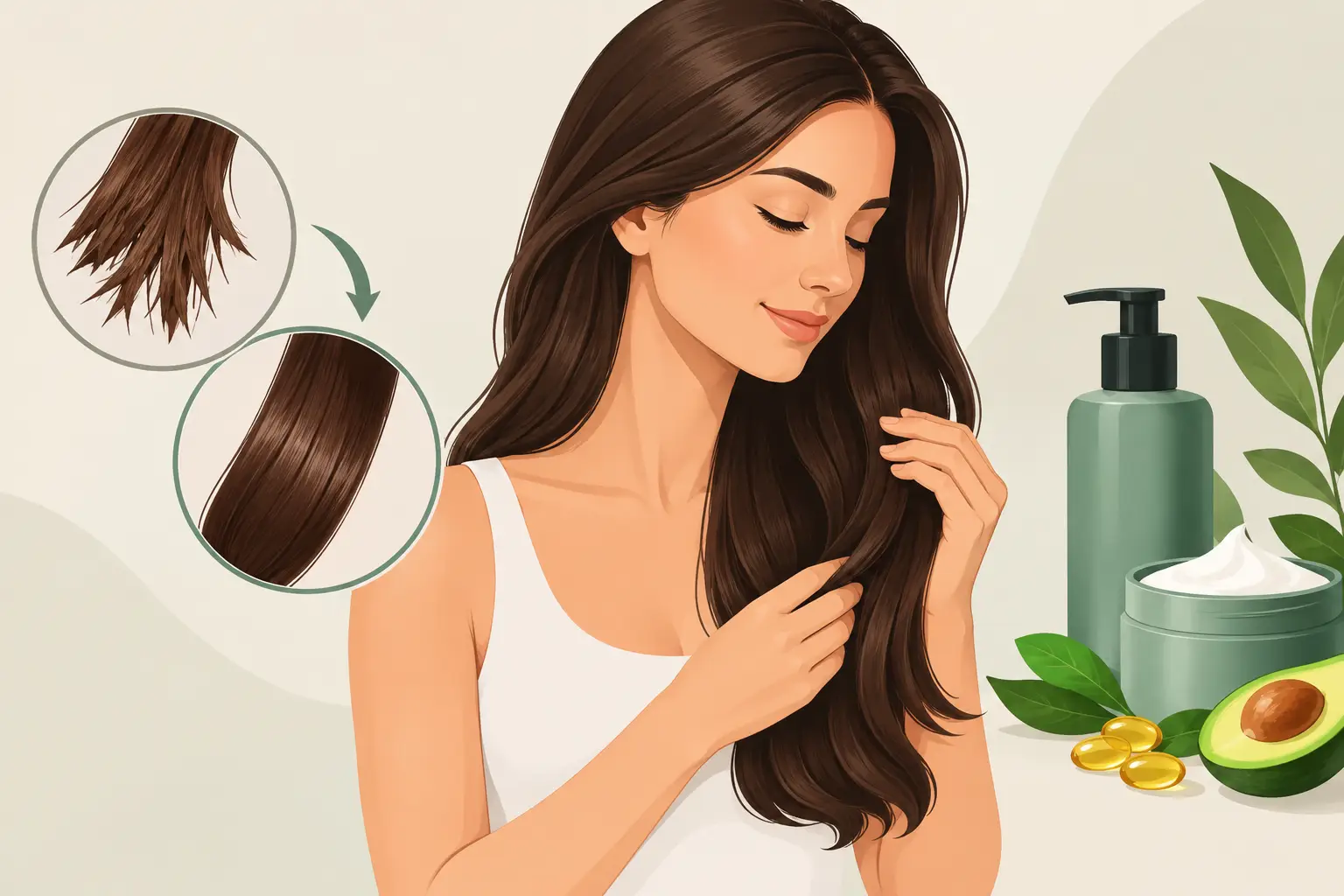
A good hair breakage repair treatment begins with an honest look at what your hair is telling you. Snapping through the lengths, white dots at the ends, a rough feel after washing, and strands that never seem to grow beyond a certain point can all point to breakage. The aim is not simply to make damaged hair look better for a day. It is to protect the hair you have, improve its condition and create a routine that supports stronger, shinier lengths over time.
Hair can feel like a deeply personal part of your style. When it becomes fragile, frizzy or dull, your usual colour, blow-dry or waves may not sit as beautifully as they should. With the right professional assessment and consistent home care, healthy-looking hair is absolutely within reach.
Why hair breaks in the first place
Hair breakage is different from shedding. Shedding happens from the root and is a normal part of the hair growth cycle. Breakage happens along the hair shaft when the fibre has become weakened by stress, leaving lengths uneven, fine at the ends or difficult to style.
Colour transformations, lightening, frequent heat styling and chemical services can all affect the hair’s strength, particularly when appointments are too close together or home care is not suited to the hair’s needs. This does not mean you need to give up being blonde, changing your colour or enjoying a polished blow-dry. It means your hair plan needs to be as considered as your desired result.
Daily habits matter too. Rough towel drying, brushing wet hair without care, tight styles, sleeping on abrasive fabric and repeatedly running hot tools over the same section can gradually wear away at the cuticle. Extensions that are not correctly fitted, maintained or removed can also place avoidable tension on fragile hair.
Sometimes the problem is more localised. Breakage around the hairline may come from tight ponytails or heat tools, while dry ends can signal that a trim and more protective styling are overdue. A personalised consultation makes it easier to identify the pattern rather than treating every form of damage in the same way.
What a hair breakage repair treatment can really do
There is one point worth making clearly: a broken hair fibre cannot biologically heal itself. Once a strand has snapped, it cannot be fused back together permanently. However, an expertly selected hair breakage repair treatment can reinforce weakened areas, smooth the cuticle, improve flexibility and reduce further snapping. The visible difference can be remarkable.
Professional treatments work by delivering a targeted blend of conditioning ingredients, proteins, lipids and bond-supporting technology where it is needed most. Depending on the formula and your hair history, this can help hair feel less porous, more manageable and noticeably softer without sacrificing movement.
The word “repair” should not automatically mean a heavy protein mask. Overusing protein on hair that is already rigid can leave it feeling stiff and more prone to snapping. Likewise, moisture-rich care alone may make severely processed hair feel soft but not sufficiently supported. The best approach balances strength with hydration, based on how your hair responds.
At RHair & Beauty, a treatment recommendation should sit within the bigger picture: your colour history, heat habits, scalp condition, styling goals and the time you can realistically give your routine at home. That is how salon care becomes beauty that feels like you, rather than another product left unused in the bathroom cupboard.
The salon approach: assess, protect and restore
A considered repair appointment often starts before the treatment bowl. Your stylist will assess your hair’s elasticity, texture, porosity and the areas experiencing the most breakage. They may also ask when the issue began, how often you lighten or heat style, and what products you are currently using.
From there, the treatment can be selected to complement the hair’s immediate needs. For some clients, this may mean intensive restorative care before a colour service. For others, it may be a deep-conditioning treatment paired with a careful trim to remove split, fragile ends. Removing compromised ends will not make hair grow faster from the scalp, but it can prevent splits travelling higher up the strand and help retain length.
If your hair is regularly coloured or lightened, your stylist may also adjust the approach to future appointments. Softer regrowth blends, thoughtfully spaced lightening sessions, lower-maintenance dimensional colour or strategic toning can help you enjoy luminous colour with less ongoing stress on the lengths. There is always a trade-off: the palest, brightest finish may require more maintenance and a stronger commitment to restorative care than a softer lived-in blonde.
A professional blow-dry is not only the finishing touch. It is also an opportunity to show you how to dry and style hair with less tension, controlled heat and the right product protection. Small changes in technique can make a meaningful difference between salon visits.
Your at-home routine between appointments
Consistency is where treatment results become long-lasting. You do not need an overflowing shelf of products, but the products you use should have a purpose. Start with a salon-quality shampoo and conditioner chosen for your hair’s condition, then add a leave-in treatment or heat protectant before blow-drying or using hot tools.
Wash with lukewarm rather than very hot water, and focus shampoo on the scalp rather than scrubbing the lengths. Let the rinse carry through the mid-lengths and ends, then apply conditioner with a gentle smoothing motion. After washing, press out excess water with a soft towel or microfibre wrap instead of rubbing.
Wet hair is at its most vulnerable, so detangle patiently. Use a wide-tooth comb or a suitable detangling brush, beginning at the ends and working upwards in small sections. If your hair catches often, a leave-in conditioner can provide the slip needed to reduce tugging.
Heat protection is non-negotiable if you blow-dry, straighten or curl. Keep the tool moving, avoid the highest temperature unless your stylist has advised it, and resist the temptation to keep passing over a section for extra smoothness. One carefully prepared pass is kinder to the hair than five rushed ones.
For many people, a weekly mask is helpful, but more is not always better. Fine hair may need a lighter treatment or less frequent use to avoid feeling weighed down. Highly processed, coarse or curly hair may benefit from richer moisture more often. Your hair’s feel after drying is a useful guide: bouncy and smooth is the goal, not coated, limp or brittle.
Habits that protect fragile lengths
Repair is much easier when the causes of breakage are reduced. Wear tight styles less often, vary where you position ponytails and buns, and use snag-free ties. If you sleep with long hair loose, a gentle braid or low, relaxed style can limit tangling overnight.
Be especially careful around the front hairline and nape, where delicate strands are commonly exposed to friction. A smooth pillowcase, gentle brushing and avoiding heavy tension when styling can help preserve these finer areas. For extensions, follow your maintenance schedule and book removal or repositioning on time. Professional extensions should enhance your confidence, never compromise the condition of your natural hair.
Nutrition, stress and health changes can affect hair growth and shedding, but they do not always explain breakage through the lengths. If you notice sudden significant shedding, patchy loss, scalp discomfort or breakage that continues despite a gentle routine, speak with your GP or a qualified health professional. A salon treatment supports the hair fibre, while medical concerns deserve proper assessment.
When to book a professional repair consultation
Book in when your hair feels rough even after conditioning, tangles easily, breaks during brushing or has become difficult to colour and style evenly. It is also wise to seek advice before a major lightening service if your hair has been heavily processed, chemically straightened or recently exposed to frequent heat.
A professional consultation gives you clarity on what is realistic now and what may take a little patience. Sometimes the best next step is an intensive treatment and a polished trim. Sometimes it is a gradual colour plan, a break from high heat or a home-care reset. Each choice is made to protect the health, shine and confidence you want to see in the mirror.
Your strongest hair routine is one you can enjoy and maintain. Give fragile lengths the attention they need, choose care that suits your individual hair story, and let every appointment move you closer to hair that feels beautifully finished.

