Length can change the way a haircut sits, while added volume can make fine or colour-treated hair feel fuller and more polished. But when choosing tape versus weft extensions, the best option is not simply the one that creates the most dramatic before-and-after. It is the method that suits your natural hair density, lifestyle, styling routine and commitment to maintenance.
Both tape and weft extensions can deliver soft, natural-looking results when they are professionally colour-matched, placed with precision and cared for properly. The difference lies in how each method is attached, how it moves with your hair and what it asks of you between salon visits.
Tape versus weft extensions: the key difference
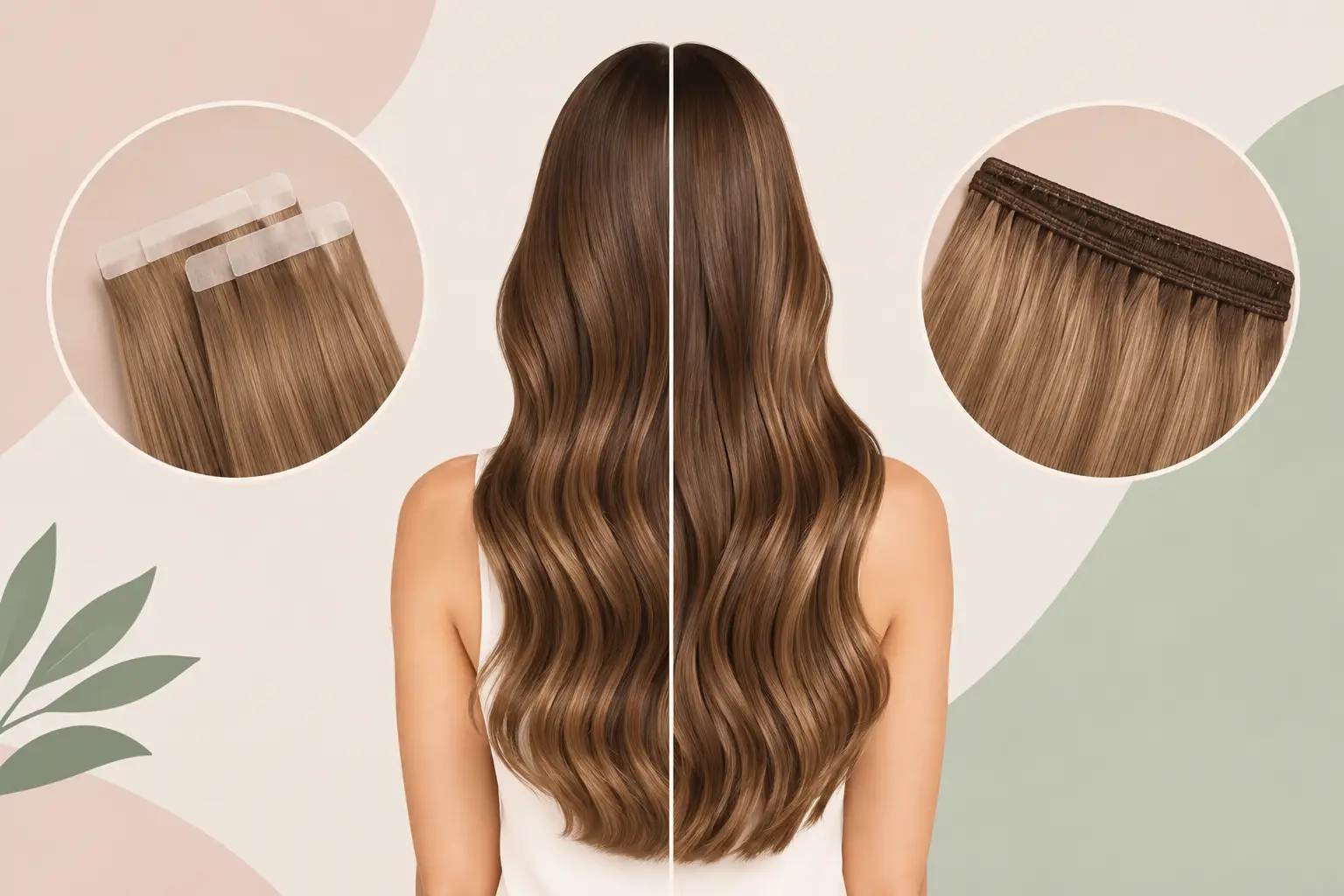
Tape extensions are thin, pre-taped panels of hair that are applied in small sandwich-like sections around your natural hair. Their flat profile makes them particularly discreet, especially through the sides and crown. They are often chosen by clients who want extra fullness or length without a bulky feel.
Weft extensions are lengths of hair attached in a continuous row, usually secured through a professional beaded-row or sewn method. A weft can create substantial volume with fewer attachment points, making it a beautiful option for clients wanting a fuller transformation. There are different types of wefts, and the right installation technique matters just as much as the hair itself.
Neither method is automatically better. A refined result comes from matching the extension system to the person wearing it.
When tape extensions may suit you best
Tape extensions are often a lovely match for fine to medium hair, particularly when the goal is a lightweight boost rather than maximum density. Because the adhesive tabs lie flat against the head, they can blend beautifully with smooth, straight or softly waved styles.
They are also a popular choice for clients who wear their hair down most of the time and enjoy a low-profile finish. If your natural hair is finer around the temples or you are growing out a shorter cut, tapes can be placed strategically to soften those areas and create a more even silhouette.
The trade-off is that tape extensions require thoughtful product use. Oils, rich conditioners and styling products applied too close to the tape tabs can affect adhesion. You will also need to avoid applying conditioner directly at the root area. With the right home-care routine, this becomes second nature, but it is worth considering if you love generous scalp oils or frequent at-home treatments.
Tape extensions generally need to be removed, cleaned and re-applied every six to eight weeks as your natural hair grows. The extension hair may be reused for several appointments when it remains in beautiful condition, although this depends on its quality, colour service history and how consistently it has been cared for.
When weft extensions may be the better choice
Weft extensions are ideal for clients who want noticeable volume, length or both. They can be especially effective on medium to thicker hair, where there is enough natural density to conceal the row comfortably. A carefully fitted weft distributes the visual impact of added hair across a wider area, creating that glossy, abundant finish many clients picture when they think of extensions.
For someone who regularly styles their hair in waves, wears a bouncy blow-dry or wants more body in an upstyle, wefts can provide exceptional presence and movement. They may also be a practical choice when you want a fuller result without many individual tape panels throughout the head.
The row itself does require more awareness than tapes. You may feel it slightly when your hair is first fitted, particularly when sleeping or wearing a high ponytail. A skilled extension specialist will position the weft to allow comfortable movement and protect your natural hair, but it is still important to be realistic about your preferred hairstyles. If you wear your hair very high and tight every day, discuss this during your consultation.
Most weft installations need to be moved up approximately every six to ten weeks. As with tapes, timing varies according to growth, hair type and how the installation is wearing. Waiting too long for maintenance can create unnecessary tension as the natural hair grows away from the scalp.
Comfort, visibility and everyday wear
Comfort is personal. Some clients love the barely-there flatness of tapes, while others prefer the simplicity of having a few secure weft rows rather than multiple small bonds. Your sensitivity at the scalp, hair density and usual parting all play a role.
Tapes are often easier to disguise in very fine hair because the panels sit so close to the head. However, they need enough natural hair around each section to remain hidden. Wefts can be incredibly discreet too, but usually need more density at the root and careful placement to avoid visibility when the hair is lifted or parted.
Your favourite styling habits matter here. Both options can be curled, waved and straightened with care, but heat should stay away from tape tabs and should always be used with a quality heat protectant. For wefts, make sure the hair beneath the row is fully dry after washing. Moisture trapped near the attachment area can lead to tangling and discomfort.
The health of your natural hair comes first
Extensions should never feel painfully tight, cause persistent headaches or make your scalp sore. A brief adjustment period can be normal, particularly with a fuller weft installation, but ongoing discomfort is a sign to contact your salon.
Healthy extension wear starts before the first application. Your stylist should assess your natural hair, scalp condition, previous colour work and any fragile areas before recommending a method. Hair that is very fine, severely compromised or actively shedding may benefit from a restorative plan before extensions are fitted.
It is also essential to choose an amount of extension hair your natural hair can comfortably support. More hair is not always better. An elegant transformation should feel balanced, look believable and allow your own hair to thrive underneath.
At home, brush gently from the ends upwards using an extension-safe brush, holding the root area as you work through any tangles. Brush before washing, before bed and after exercise. Wash with salon-recommended products, keep conditioner through the mid-lengths and ends, and sleep with dry hair in a loose braid or low ponytail to reduce friction.
Cost, maintenance and value over time
Comparing price alone can be misleading. The initial cost reflects not just the extension hair, but the consultation, colour match, precision application, cut and blend, and future maintenance required to keep the result looking refined.
Tape extensions may be appealing if you are after a lighter volume service with regular re-tapes. Weft extensions can offer striking density and may use fewer attachment sections, but the installation and move-up appointment can be more involved. In either case, premium human hair and professional fitting are an investment in both appearance and hair health.
Your maintenance schedule should be part of the decision, not an afterthought. If your calendar makes it difficult to return consistently for move-up appointments, extensions may become less enjoyable and less safe to wear. Choose a method that fits your routine as comfortably as it fits your hair.
Your consultation should decide the method
Bring inspiration photos, but also be open to expert guidance. A photo may show a result created with wefts on naturally thick hair, while your own most flattering and comfortable outcome could be achieved with tapes, or a tailored combination of both.
A detailed consultation should cover your hair history, desired length, colour, budget, daily styling and the amount of maintenance you are happy to commit to. It should also include an honest conversation about whether your hair is ready for extensions now. At RHair & Beauty, this personalised approach helps ensure every extension service is designed around beauty that feels like you.
The right extensions should not feel like a compromise. They should give you the confidence of fuller, beautifully blended hair while respecting the hair you already have. When the method, placement and aftercare are all chosen with care, your transformation can feel effortless every time you catch your reflection.