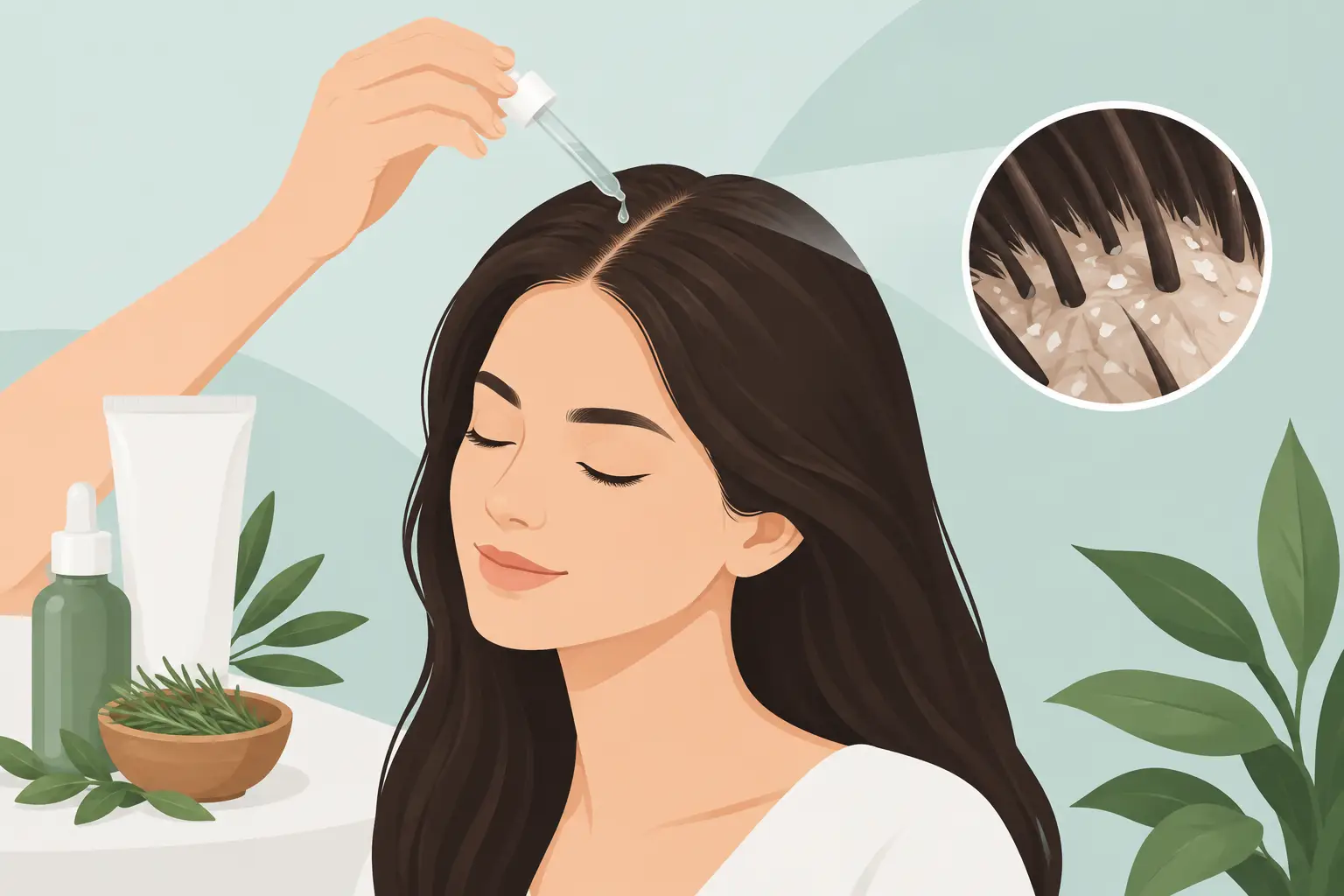
Those tiny white flakes on a dark top are frustrating enough. Add an itchy, tight or oily-feeling scalp and dandruff can quickly affect how comfortable and confident you feel wearing your hair out. The right scalp treatment for dandruff is not about scrubbing harder or masking the issue with dry shampoo. It is about understanding what your scalp needs, then caring for it consistently with the right professional and at-home approach.
Dandruff is common, but it is never something you simply have to put up with. With a considered routine, many people see a meaningful improvement in flaking, irritation and the way their hair looks at the roots.
Why dandruff needs more than a quick fix
Dandruff occurs when dead skin cells shed from the scalp more quickly than usual. It is often associated with an overgrowth of a naturally occurring yeast called Malassezia, which can thrive in scalp oils. For some people, this triggers inflammation, itching and visible flakes. For others, product build-up, sensitivity, infrequent cleansing, stress, hormonal shifts or a change in season can make the concern more noticeable.
The flakes themselves can be dry and powdery, or larger and slightly greasy with a yellowish tone. This distinction matters. A scalp that is truly dry may need gentler cleansing and more moisture, while an oily, flaky scalp often responds better to targeted anti-dandruff ingredients and thorough rinsing.
That is why copying a friend’s routine or changing shampoos every week rarely delivers lasting results. Beautiful hair begins at the scalp, and the most effective treatment is tailored to what is actually happening there.
Choosing a scalp treatment for dandruff
A good dandruff routine combines active care with scalp-friendly habits. The goal is to reduce flakes while protecting the scalp barrier, so your hair remains soft, fresh and manageable rather than stripped or dull.
Start with a targeted shampoo
For persistent dandruff, an anti-dandruff shampoo is usually the foundation of treatment. Look for formulas containing proven active ingredients such as ketoconazole, selenium sulfide, piroctone olamine, salicylic acid or zinc pyrithione where available. Each works differently: some help control yeast, while others lift excess scale and build-up.
Use the shampoo exactly as directed on the label. Many active formulas need a few minutes of contact time on the scalp before rinsing, rather than being washed away immediately. Focus the product on the roots and scalp, then let the lather cleanse the lengths as it rinses through.
There is a trade-off to consider. Stronger medicated shampoos can be very effective, but frequent use may leave some hair types feeling dry, particularly coloured, lightened, curly or extension-wearing hair. Alternating with a gentle, salon-quality shampoo can help maintain softness without abandoning scalp care. Your ideal schedule may be twice a week, or it may be a short intensive period followed by maintenance.
Treat build-up with care, not aggression
Styling products, dry shampoo, oils and conditioner that has been applied too close to the roots can all create build-up that resembles dandruff or makes genuine dandruff harder to manage. A professional scalp assessment can help separate the two.
Avoid scratching with nails, harsh salt scrubs or abrasive brushes. They can create tiny breaks in the skin and worsen inflammation. If exfoliation is appropriate, a gentle scalp treatment with carefully selected ingredients is a far more refined option. It should leave the scalp feeling clean and balanced, not sore or squeaky.
Keep conditioner off the scalp
Conditioner is essential for polished lengths, shine and colour care, but it generally belongs from the mid-lengths to the ends. Applying rich conditioners, masks or leave-in treatments directly to the scalp can contribute to residue for some people, especially if their roots become oily quickly.
This does not mean your hair has to miss out on nourishment. It means placing products with precision. Cleanse and treat the scalp, then hydrate the hair where it needs it most.
Small habits that can make a visible difference
Consistency matters more than constantly chasing the newest product. Wash your hair often enough for your scalp type and lifestyle. If you exercise regularly, use styling products, wear hats or naturally have oilier roots, leaving the scalp unwashed for too long may allow oil and scale to accumulate.
On the other hand, washing repeatedly with very hot water and strong cleansers can aggravate dryness and sensitivity. Lukewarm water, careful rinsing and a routine you can maintain will usually serve your scalp better than an extreme approach.
It also helps to wash brushes, combs and pillowcases regularly, particularly while you are getting dandruff under control. Brushes collect oil, product and loose skin, then redistribute them through freshly washed hair. Be mindful with scalp oils as well. While they can feel soothing on a dry scalp, heavier oils may make some forms of dandruff worse by creating a more favourable environment for yeast.
If flakes have appeared after a new colour, styling or haircare product, pause its use and take note of any burning, redness or rash. Dandruff and contact irritation can look similar at first, but they require different care.
When professional guidance is worth it
A salon consultation can be particularly helpful when dandruff is affecting the finish of your colour, extensions, smoothing treatment or everyday styling. At RHair & Beauty, a personalised conversation allows your stylist to consider your scalp condition alongside your hair texture, colour history, wash frequency and styling goals.
This matters because a scalp routine should complement the service you love. Someone maintaining bright blonde may need a plan that protects tone and hydration, while a client with extensions needs products and application techniques that respect both the scalp and attachment points. A polished result is never just about what looks good when you leave the salon. It is about helping your hair and scalp continue to feel beautiful between appointments.
A professional can also recommend whether a clarifying service, a gentler retail routine or a targeted treatment is most suitable. The best advice is specific, not one-size-fits-all.
Know when to see a doctor
Most mild dandruff can improve with consistent over-the-counter care. However, it is wise to see your GP or a dermatologist if your scalp is very red, painful, swollen, weeping, bleeding or intensely itchy, or if you notice patchy hair loss. Seek medical advice too if flakes extend to the eyebrows, sides of the nose, ears or other areas of skin, or if there is no improvement after several weeks of appropriate treatment.
Conditions such as seborrhoeic dermatitis, psoriasis, eczema, fungal infections and allergic contact dermatitis can all cause scaling. These need an accurate diagnosis, particularly if symptoms are recurring or severe. A salon scalp treatment can support the comfort and appearance of your hair, but it is not a substitute for medical care where it is needed.
Give your scalp time to reset
Dandruff often improves gradually rather than overnight. Give a new routine enough time to work, follow product directions and avoid introducing several new active products at once. That makes it easier to identify what is helping and prevents unnecessary irritation.
Your scalp deserves the same attentive care as your colour, cut and skin. When it feels balanced, your hair sits lighter at the roots, looks fresher for longer and gives you one less thing to think about as you step into your day.

