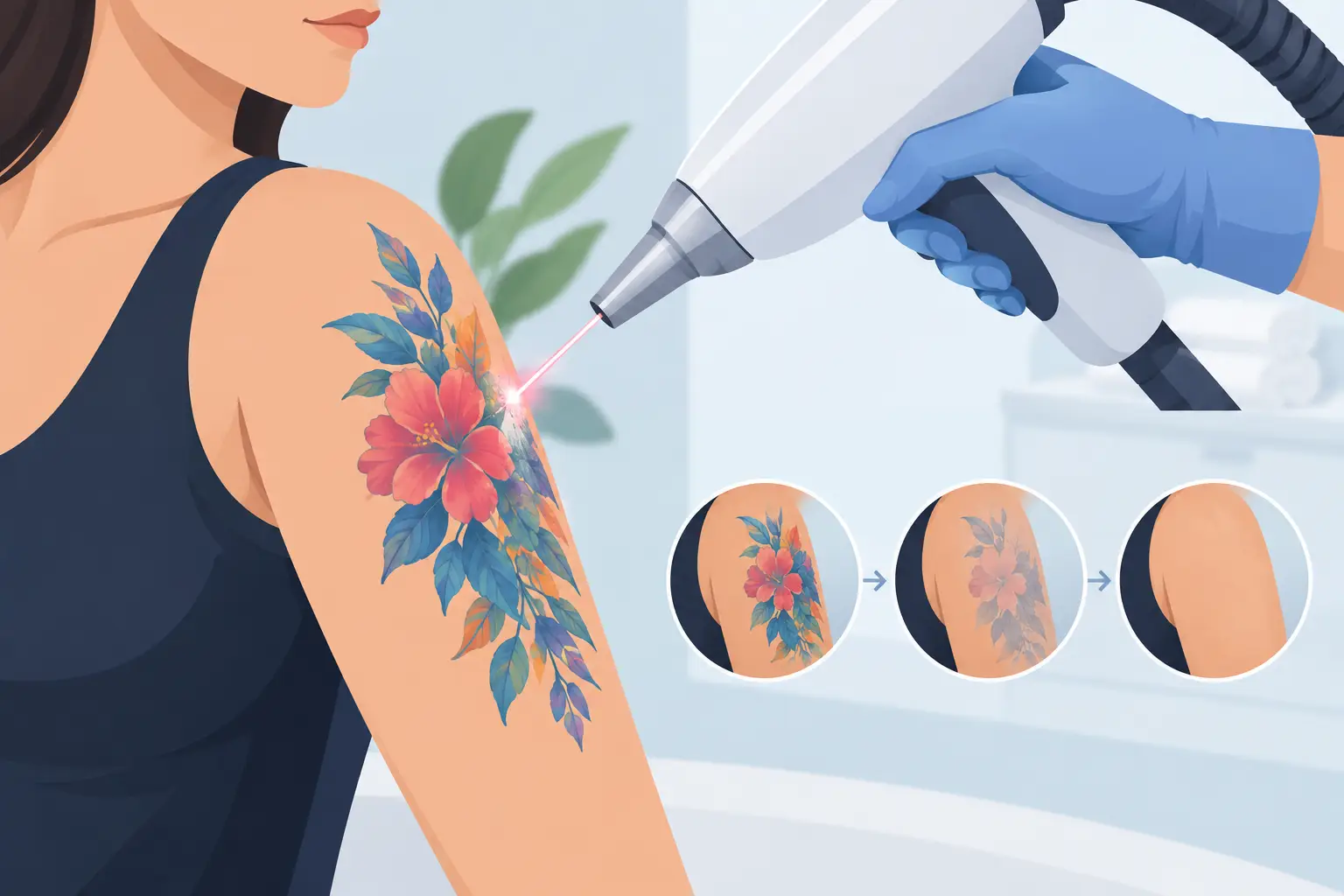
A bright sleeve, a tiny red symbol or a once-loved watercolour design can feel very different years after it was first applied. So, can laser remove coloured tattoos? Yes, many coloured tattoos can be significantly faded or removed with laser treatment, but colour removal is more nuanced than removing black ink. The ink shades used, their depth, your skin tone and the technology selected all shape the journey.
At RHair & Beauty, tattoo removal is approached with the same care as every personal transformation: with an individual consultation, realistic expectations and a treatment plan designed around your skin.
Can laser remove coloured tattoos safely?
Laser tattoo removal works by sending concentrated pulses of light into the tattoo pigment. The ink absorbs that energy, breaks into tiny particles and is gradually cleared by your body’s natural immune processes in the weeks after treatment. The laser is targeting the ink, rather than cutting or scraping the skin, which is why it is the preferred method for professional tattoo removal.
Different inks absorb different wavelengths of light. Black and dark blue inks generally absorb laser energy very effectively, which often makes them the most responsive colours. Coloured tattoos can also respond beautifully, but they need the right wavelength and a practitioner who understands how pigment behaves.
Safety is never simply about choosing a powerful laser. It comes down to correct settings, careful skin assessment, suitable spacing between sessions and thoughtful aftercare. When treatment is tailored properly, the aim is to fade unwanted ink while protecting the surrounding skin as much as possible.
Why some tattoo colours are harder to remove
A tattoo is rarely made with one simple ink. Even a design that appears to be a single shade may contain layered pigments, different concentrations of ink or colours placed at varying depths. That is why two tattoos that look similar can have very different removal timelines.
Dark ink is usually the most responsive
Black, charcoal and dark blue pigments tend to respond best because they absorb a broad range of laser light. A professionally applied black tattoo may still require several sessions, particularly if it is dense or covers a large area, but it is commonly one of the more predictable colours to fade.
Red, orange and warm shades can respond well
Red and orange inks often respond to a wavelength designed for warmer pigments. They may clear well, though the exact result depends on the formulation of the ink and how saturated the tattoo is. Older tattoos can sometimes fade more readily than fresh, heavily packed work, but age alone does not guarantee an easier treatment.
Green, blue and purple may take more patience
Green, turquoise, blue and purple inks have long been known as challenging shades. These pigments may need specialised wavelengths and a longer series of treatments. A clear, bright green can behave very differently from a darker forest green, for example. This is where a consultation and, in some cases, a small test spot provide valuable information before committing to a full removal plan.
Yellow, white and flesh-toned ink are less predictable
Light colours can be the most complex. Yellow is often difficult for lasers to detect and break down effectively. White, flesh-toned and some pink inks may contain titanium dioxide or iron oxides. Rather than fading immediately, these pigments can occasionally darken after laser exposure through a process called oxidation.
This does not automatically mean such tattoos cannot be treated. It does mean the practitioner needs to identify the risk, discuss it plainly and select treatment carefully. Cosmetic tattooing and permanent make-up deserve particular caution for this reason.
The laser matters, but the assessment matters more
It is tempting to ask whether a particular laser can remove every colour. In practice, there is no single setting or machine that makes every tattoo disappear. Quality tattoo removal relies on matching the laser wavelength to the pigment, then adapting the treatment as the tattoo changes over time.
Modern Q-switched and picosecond laser technology can be used for tattoo removal. Both deliver very short pulses of energy to fragment ink without prolonged heat exposure to the skin. Picosecond technology can be helpful for stubborn pigment in some cases, but it is not a shortcut to guaranteed removal. A skilled assessment, appropriate settings and a conservative approach remain essential.
Your practitioner should ask about the tattoo’s age, whether it was professionally applied, any previous removal attempts, scarring, your skin’s tendency to pigment or scar, and medications or health factors that could affect healing. They should also examine the colours in good light, rather than making promises from a photo alone.
How many sessions will a coloured tattoo need?
There is no honest one-size-fits-all answer. Many tattoos need multiple sessions, often spaced around six to eight weeks apart, though the appropriate interval can vary. This breathing room gives the skin time to heal and allows the body to process fragmented ink particles.
A small, lightly applied black tattoo may fade in fewer sessions than a dense, multi-coloured professional piece. Cover-up tattoos often take longer because there can be several layers of pigment. Tattoos on areas with stronger circulation, such as the upper body, may respond differently from those on hands, feet or lower legs.
The goal may also influence the plan. Complete removal naturally asks more of the skin and the process than fading a design enough for a cover-up. If your plan is to replace an old tattoo with something that feels more like you, partial fading may be the more efficient and satisfying option.
What coloured tattoo removal feels like
Most people describe each laser pulse as a quick snap against the skin, often compared with the flick of a warm elastic band. The sensation is brief, but the area can feel warm and tender afterwards. Cooling methods can improve comfort during treatment, and the appointment itself is usually much shorter than the time it took to receive the tattoo.
Immediately afterwards, whitening or frosting of the treated ink may appear. Redness, swelling and mild tenderness are also common. Some people experience small blisters or scabbing as part of the healing process. These should be allowed to heal naturally – picking at the area increases the chance of irritation, infection and unwanted scarring.
Aftercare protects your result
A beautiful result is not only created in the treatment room. For the first days after a session, keep the treated area clean, dry and protected as instructed by your practitioner. Avoid heat, swimming pools, spas, strenuous exercise that causes heavy sweating, and tight clothing that rubs against the site while it is healing.
Sun protection is especially important. UV exposure can increase the risk of pigmentation changes and make treatment planning more difficult. Once the skin has healed, apply broad-spectrum sunscreen to exposed areas and avoid tanning the treatment site. If you notice increasing pain, spreading redness, discharge or any sign of infection, seek medical advice promptly.
Skin tone, scarring and realistic expectations
Every skin tone deserves a considered laser plan. Skin with more melanin can be more prone to temporary or, less commonly, lasting lightening or darkening after laser treatment. This does not rule out tattoo removal, but it reinforces why conservative settings, experienced care and strict sun avoidance matter.
There is also a distinction between the tattoo and the skin beneath it. Laser treatment can remove pigment, but it cannot always erase texture changes left by the original tattooing process. If the tattoo has existing raised scarring, ink blow-out or uneven texture, these may remain visible even after the colour has faded.
The most trusted practitioners will not promise that every trace will vanish. Instead, they will explain what is likely for your particular tattoo, identify the variables that may slow progress and review the skin at every appointment. That transparency is part of feeling confident in your treatment.
When to arrange a consultation
A consultation is the right first step if you are considering removal of a coloured tattoo, fading for a cover-up, or treatment of permanent make-up. Bring clear information about the tattoo where possible, including when it was done and whether it has been treated before. If you have a history of keloid scarring, are pregnant or breastfeeding, are taking photosensitising medication, or have an active skin condition in the area, mention this before treatment.
Your tattoo does not have to define your next chapter. With a personalised assessment, patience between sessions and professional guidance, coloured tattoo removal can be a considered step towards skin that feels more like you again.

