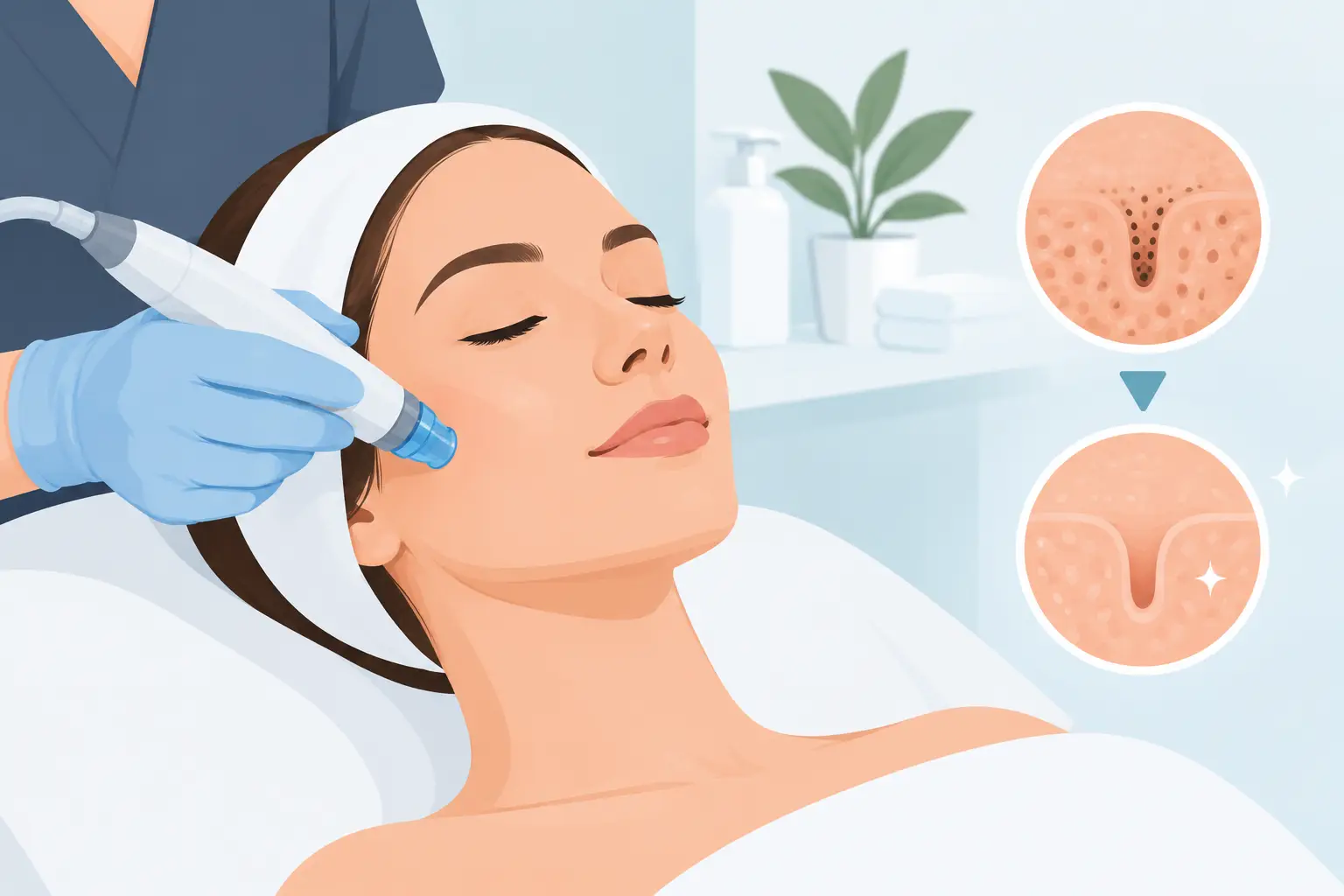
A close look in the bathroom mirror can make congestion feel more noticeable than it is. Tiny dark dots across the nose, a rougher feel through the T-zone or makeup that settles unevenly are all common reasons clients ask: can Hydrafacial clear pores? The short answer is that it can deeply cleanse pores and visibly reduce the look of congestion, but it cannot permanently shrink pores or stop them from filling again.
For skin that feels dull, bumpy or overwhelmed by blackheads, a professional Hydrafacial can be a beautifully effective reset. It combines cleansing, exfoliation, extraction and hydration in one considered treatment, helping your complexion look fresher without the aggressive feeling some traditional extractions can leave behind.
Can Hydrafacial Clear Pores or Just Improve Their Appearance?
Pores are natural openings in the skin that release oil and allow hair follicles to function. They do not open and close like doors, and no facial can erase them. What a Hydrafacial can do is remove the mix of excess oil, dead skin cells, sunscreen, makeup residue and environmental build-up that can sit within them.
When this material builds up, pores may look darker, larger and more obvious. Clearing that congestion often makes skin appear smoother and more refined straight after treatment. The effect is especially noticeable around the nose, chin and forehead, where oil production tends to be more active.
It is worth separating blackheads from sebaceous filaments. Blackheads are clogged pores where oil and dead skin cells have oxidised at the surface. Sebaceous filaments are a normal part of the pore lining, commonly seen as fine grey or skin-coloured dots on the nose. A Hydrafacial may make both less visible, but sebaceous filaments naturally return because your skin needs them to move oil to the surface.
That distinction matters. The goal is not poreless skin – it is healthy, balanced skin with a clear, luminous finish that still looks like you.
How a Hydrafacial Helps With Congestion
Hydrafacial treatment is designed around several steps that work together rather than relying on forceful extraction alone. Your skin is first cleansed and gently resurfaced to lift the layer of dead cells that can trap oil. A professional exfoliating solution then helps loosen debris within congested areas.
The extraction stage uses controlled vortex technology to lift impurities from the skin while delivering hydration. Unlike squeezing at home, which can irritate the skin or push debris deeper, this approach is precise and designed to be comfortable. The treatment finishes by replenishing the skin with hydrating, antioxidant-rich ingredients selected to support a soft, healthy-looking glow.
For many clients, this balance is the reason Hydrafacial feels different. Skin can be thoroughly cleaned without being left tight, stripped or visibly inflamed. That is particularly valuable if you have a busy week, an occasion ahead or simply want the polished confidence of skin that looks well cared for.
What You May Notice Afterwards
Results vary according to your skin type, current routine and level of congestion, but many people notice an immediate improvement in smoothness and radiance. Makeup may apply more evenly, and the surface of the skin can feel cleaner through areas that were previously rough or oily.
If you have persistent blackheads, the difference may be more gradual. One appointment can clear surface congestion, while a planned series and thoughtful home care can help keep pores looking clearer between visits. Deep, inflamed acne is different from ordinary congestion and may need medical guidance alongside salon treatments.
Why Pores Become Congested in the First Place
Congestion is rarely about being “unclean”. In fact, over-cleansing and harsh scrubs can disrupt the skin barrier, prompting dryness, sensitivity or rebound oiliness. Pores can become more noticeable for many reasons, including naturally oily skin, hormonal shifts, humid weather, heavier makeup, rich products that do not suit your skin, and inconsistent removal of SPF at the end of the day.
Ageing also plays a role. As collagen and elasticity change, pores may appear more visible, particularly on the cheeks. Hydrafacial can improve the clarity and hydration of the skin’s surface, although it is not a substitute for treatments specifically targeted at more significant textural change or loss of firmness.
A personalised consultation is valuable because congestion is not always the same concern. A shiny T-zone with occasional blackheads needs a different approach to dry, reactive skin with clogged pores caused by an overly rich routine. The best treatment plan respects what your skin needs rather than treating every visible pore as a problem to remove.
How Often Should You Have a Hydrafacial for Clearer-Looking Pores?
For an event or a seasonal refresh, a single Hydrafacial can give skin a clean, hydrated glow. If congestion is a recurring concern, many clients benefit from scheduling treatment around every four to six weeks. This timing aligns with the skin’s natural renewal cycle and offers regular support before build-up becomes more apparent.
Your ideal frequency depends on how quickly your skin becomes oily, whether you are prone to blackheads, the products you use at home and your wider skin goals. Sensitive skin may need a gentler pace. Oily or heavily congested skin may respond well to a more consistent professional plan, adjusted as the complexion settles.
Results also last longer when you avoid undoing the work at home. Cleanse thoroughly each evening, especially after sunscreen or makeup, and choose products suited to your skin rather than the strongest products on the shelf. A lightweight, non-comedogenic moisturiser is still useful even if your skin is oily, as dehydration can leave the complexion looking dull and less balanced.
What Hydrafacial Cannot Do
A premium facial should come with clear expectations. Hydrafacial can clear accumulated debris and improve the visible appearance of pores, but it does not change your genetic pore size. Nor is it a cure for acne, rosacea, eczema or every form of pigmentation.
If you have painful cystic breakouts, active infection, a severe skin flare-up or are using prescription acne medication, speak with a qualified health professional before booking. Let your therapist know about active skincare, recent cosmetic procedures, allergies and any sensitivity. This allows your treatment to be tailored with care and helps protect your skin barrier.
There can also be mild, temporary redness after exfoliation or extraction, particularly in sensitive areas. Most clients find Hydrafacial comfortable and return to normal activities promptly, but it is wise to avoid harsh exfoliants, strong retinoids, very hot showers and intense exercise immediately afterwards if your therapist recommends it.
Getting More From Your Appointment
Come to your appointment ready to share what you would like to see change. Perhaps your pores look enlarged under foundation, your nose is prone to blackheads, or your skin has lost its usual clarity. These details help your therapist focus on the areas and concerns that matter most to you.
Afterwards, resist the temptation to inspect or pick at every pore. Keep your routine calm, hydrate well and wear broad-spectrum SPF each day. Consistency is far more effective than a cycle of aggressive exfoliation followed by irritation.
At RHair & Beauty, Hydrafacial therapy is approached as part of a personalised skin journey – one that pairs advanced care with the attentive, relaxing experience you deserve. Clearer-looking pores are not about chasing perfection. They are about helping your skin feel clean, comfortable and confidently radiant, so your beauty still feels entirely like you.