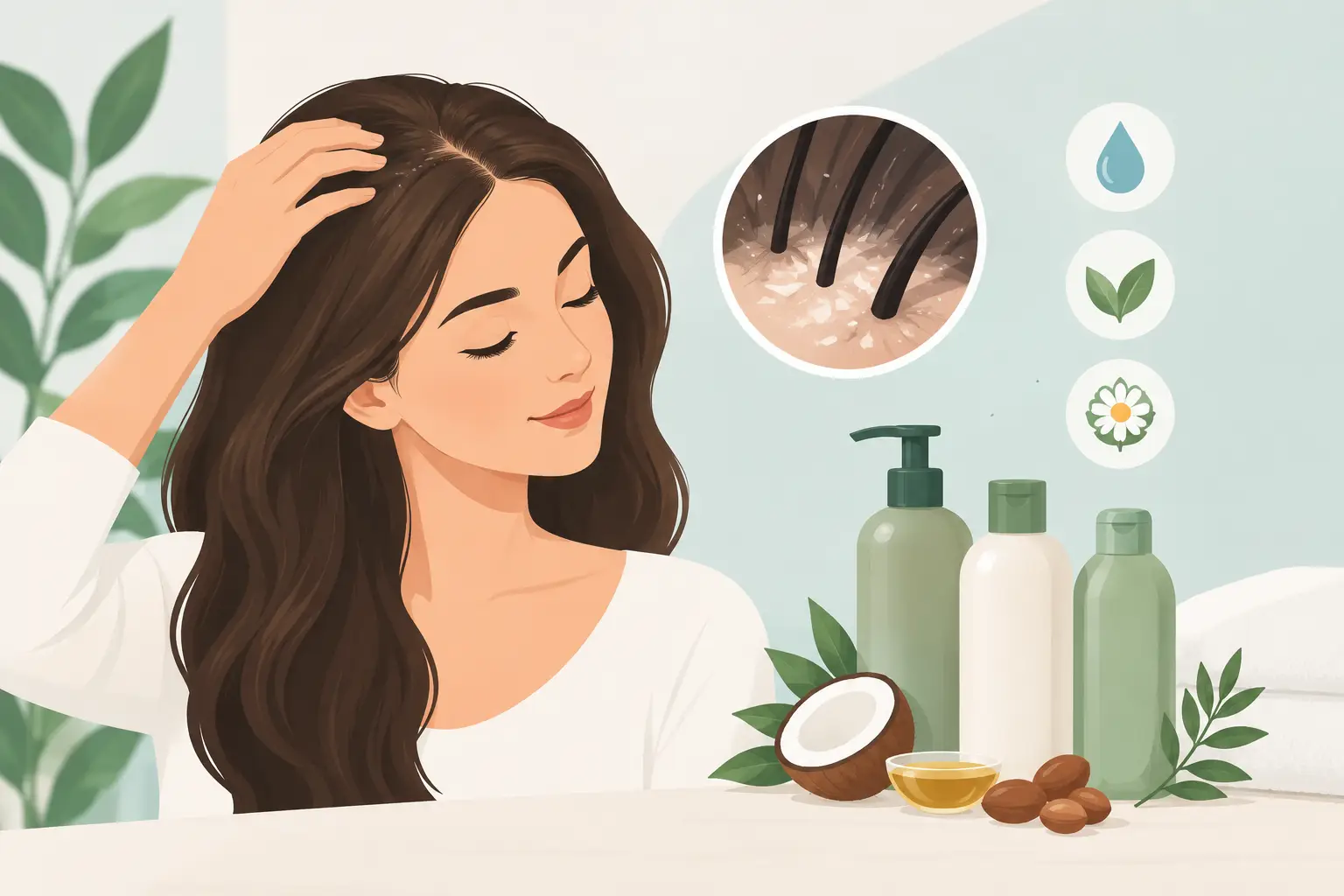
A dry scalp can make even freshly styled hair feel uncomfortable. Tightness after washing, visible flakes along the part line and an urge to scratch are all signs your scalp needs more thoughtful care. The best shampoo for dry scalp is not simply the richest formula on the shelf – it is one that cleanses gently, supports the scalp barrier and suits your hair’s individual needs.
For colour-treated blondes, extension wearers, clients with naturally curly hair or anyone managing heat styling and smoothing treatments, the answer can look quite different. The goal is not to coat the scalp with heavy moisture. It is to restore comfort while keeping the hair light, clean and beautifully finished.
Why your scalp feels dry in the first place
Dryness often begins when the scalp’s natural protective barrier is disrupted. Very hot showers, frequent washing, strong cleansing agents and styling-product build-up can all play a part. So can a change in weather, air conditioning, stress, hormonal shifts or a colour appointment that has left an already-sensitive scalp feeling a little compromised.
A dry scalp is sometimes mistaken for dandruff, but they are not always the same concern. Dryness tends to create fine, white flakes and a tight or uncomfortable feeling. Dandruff may involve larger flakes, oiliness, redness or ongoing irritation linked to an imbalance on the scalp. The distinction matters because a deeply moisturising shampoo may be ideal for dryness, while persistent dandruff can need a targeted active treatment and professional advice.
It also pays to look at the lengths of your hair. Hair can be dry and damaged while the scalp is oily, especially if you colour, bleach, use dry shampoo often or wear extensions. In that case, applying a rich scalp product indiscriminately can make roots feel flat without solving the real cause of irritation.
What makes the best shampoo for dry scalp?
Start with a gentle cleansing base. A shampoo should remove excess oil, styling residue and environmental build-up without leaving the scalp squeaky, tight or itchy. That stripped feeling is not proof that a shampoo is working well. More often, it is a sign your scalp is being cleansed too aggressively for its current condition.
Look for formulas designed for scalp comfort and hydration, often featuring ingredients such as glycerin, hyaluronic acid, panthenol, niacinamide, ceramides or soothing botanical extracts. These can help attract moisture, support the skin barrier and reduce the feeling of dryness without weighing down your roots.
For many people, a salon-quality hydrating shampoo is a strong place to begin because its formulation is designed to balance cleansing performance with hair condition. This is particularly valuable if your hair is coloured, lightened, keratin-treated or prone to breakage. Your shampoo should protect the investment you have made in your colour and finish, not work against it.
That said, “sulphate-free” is not a universal answer. Some people with very dry or sensitive scalps prefer it, while others need a more thorough cleanse from time to time to remove product build-up. What matters most is how your scalp feels in the days after washing and how your hair responds at the roots and through the ends.
Ingredients to approach with care
If your scalp is reactive, heavily fragranced products or formulas with high levels of drying alcohol may aggravate discomfort. Essential oils can feel refreshing for some people, yet can be irritating for others, especially on a sensitised scalp. Natural does not automatically mean gentle.
Avoid over-correcting with thick oils directly on the scalp unless they have been recommended for you. Coconut oil, castor oil and similar treatments can be lovely for certain hair types, but they may cause build-up or make flaking more visible if the underlying issue is not true dryness. A precise diagnosis is always more useful than a trend-led routine.
Match your shampoo to your hair and lifestyle
The right choice depends on more than your scalp. If you are maintaining a bright blonde, balayage or vivid colour, choose a hydrating cleanser that is colour-safe and pair it with a conditioner suited to your lengths. Purple shampoo may help manage unwanted warmth, but it can be drying when used too frequently. Alternate it with a nourishing shampoo rather than relying on it at every wash.
If you wear extensions, gentle cleansing becomes even more important. Shampoo should be worked into the scalp with fingertips, not nails, and rinsed thoroughly around the bonds, tapes or wefts. Heavy conditioners and masks belong through the mid-lengths and ends unless your stylist has advised otherwise.
For clients who enjoy regular blow-dries, straightening or smoothing services, dry scalp care should sit alongside moisture and heat protection for the hair fibre. A healthy-looking finish is easier to achieve when both the scalp and lengths are supported. You should not have to choose between fresh roots and soft, glossy ends.
Those with naturally textured or curly hair may wash less often and use richer styling products, which can make occasional build-up a factor. A gentle scalp-focused cleanser used consistently is often better than waiting until the scalp feels uncomfortable, then using an overly harsh clarifying shampoo. If you do need to clarify, follow with hydration and keep it occasional.
Wash habits that make a genuine difference
Even the best shampoo for dry scalp will struggle to help if your wash routine is working against it. Use lukewarm rather than hot water, as very hot water can remove the oils that help keep your scalp comfortable. Wet your hair fully before shampooing, then emulsify the product between your palms before applying it.
Massage with the pads of your fingertips in small, gentle circles. This lifts residue and encourages circulation without scratching delicate skin. Nails can create tiny abrasions, making irritation worse and leaving the scalp more vulnerable to sensitivity.
A second shampoo can be useful if you use styling products, exercise regularly or wash infrequently. Make the first cleanse brief to remove surface oil and residue, then use a smaller amount for the second cleanse. If your scalp is very dry, however, one careful wash may be sufficient. There is no prize for washing more often than your hair and scalp need.
Conditioner should usually be concentrated from the mid-lengths to the ends. Rinse meticulously, as leftover product can cause itchiness or a coated feeling that is easily confused with dryness. Once a week, a targeted scalp serum or hydrating treatment can be a beautiful addition, provided it matches your needs.
When dry scalp needs professional attention
A little seasonal dryness often improves with the right home care. But ongoing itchiness, redness, soreness, thick scale, scabbing, hair shedding or flakes that do not settle after a few weeks deserve more attention. These signs can be associated with conditions such as dermatitis, psoriasis, eczema or fungal dandruff, which may require assessment by a GP or dermatologist.
Your stylist can also help you make sense of what you are seeing. During a personalised consultation, a professional can assess your scalp, your colour history, your styling routine and the products currently in your shower. This is especially valuable when you are unsure whether the issue is dryness, build-up, sensitivity or a reaction to a new product.
At RHair & Beauty, tailored haircare recommendations are made with the whole result in mind: scalp comfort, colour longevity, strength, shine and the way your hair feels when you leave the salon and in the weeks that follow.
A comfortable scalp is the foundation of hair that looks polished and feels like you. If your current shampoo leaves your roots tight, flaky or unsettled, let that be your cue to choose care that is gentler, more considered and personal to your hair.