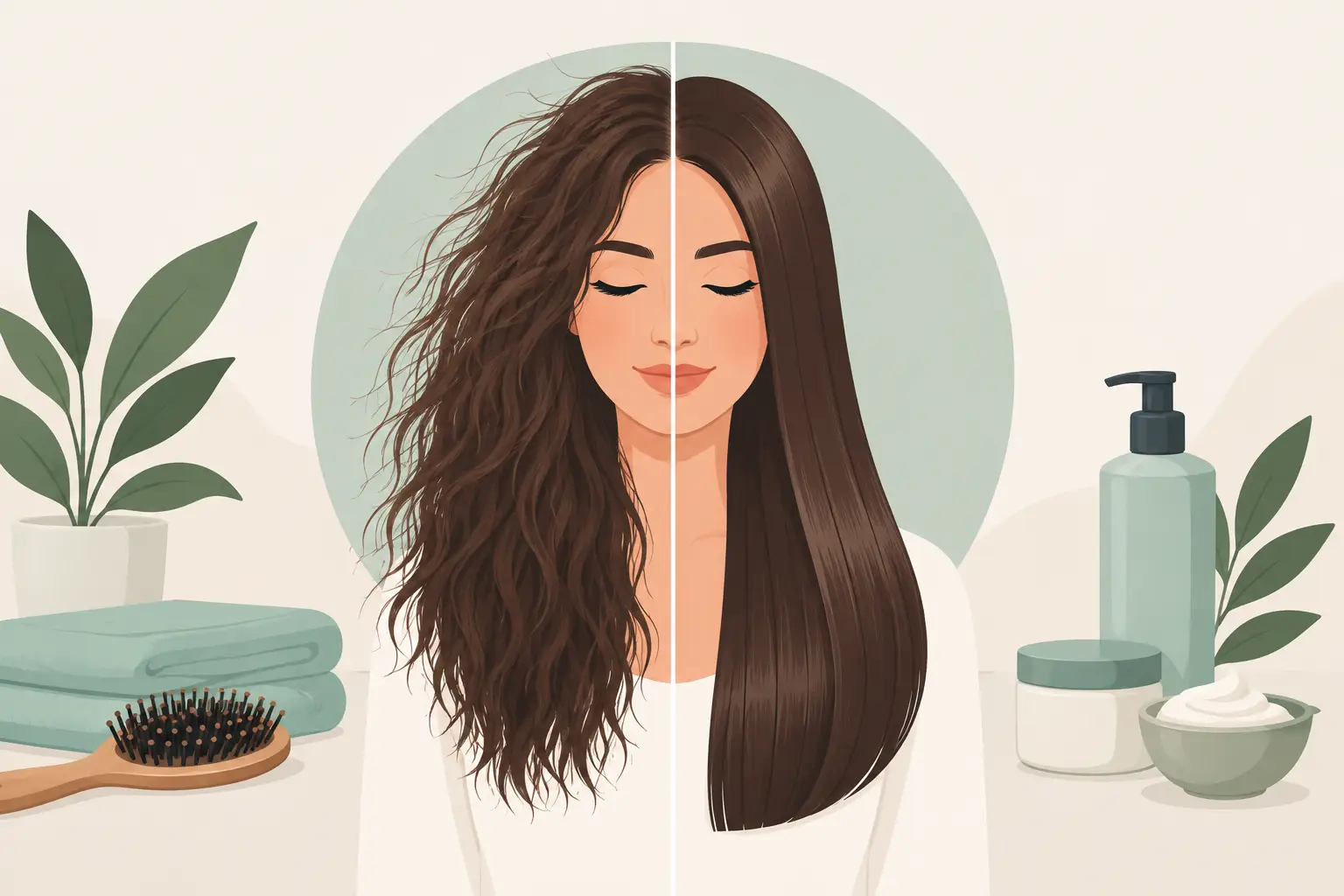
A polished blow-dry can look beautiful when you leave the salon, then meet a humid Sydney afternoon and suddenly feel twice its size. Learning how to reduce hair frizz is not about forcing naturally textured hair to behave. It is about understanding what your hair is asking for – more moisture, less friction, gentler heat or a tailored professional treatment – so it can look smooth, healthy and beautifully finished.
Frizz is often treated as a styling problem, but it is usually a hair-health and moisture-balance conversation. With the right routine, you can protect your shine, define your natural texture and make your styling results last longer between appointments.
Why hair becomes frizzy
The outer layer of every strand is called the cuticle. When it lies flat, light reflects evenly and hair feels smoother. When it is raised or disrupted, moisture moves in and out of the strand more easily. This can create the rough, fluffy or undefined finish we call frizz.
Humidity is a familiar trigger across NSW, especially for porous, colour-treated or naturally curly hair. Dryness is another major factor. Hair that lacks moisture will seek it from the air, causing the strand to swell and lose its smooth shape. Heat styling without protection, frequent bleaching, rough towel-drying, mineral build-up and harsh cleansing can all leave the cuticle more vulnerable.
That does not mean you need to avoid colour, styling or a beach swim altogether. It means your routine should match your hair’s history, texture and goals. Fine highlighted hair needs a different approach from thick, coarse curls or extensions, and the best anti-frizz routine is always personal.
How to reduce hair frizz from wash day onwards
Cleanse without stripping your hair
Start with a shampoo and conditioner chosen for your hair’s current condition, not simply what is on special. A drying cleanser can remove too much of the natural lipid layer that helps protect the cuticle, leaving hair rougher after every wash. If your hair is coloured, lightened, heat-styled or prone to dryness, a salon-quality hydrating or restorative range is often a better foundation.
Concentrate shampoo on the scalp, where oil and product build-up sit. Let the lather cleanse the lengths as it rinses through rather than scrubbing them aggressively. Follow with conditioner through the mid-lengths and ends, then leave it on for the recommended time. Rinsing with lukewarm rather than very hot water can also help your hair retain a smoother feel.
If your roots become oily quickly, avoid overloading them with rich masks or oils. Hydration belongs mainly where it is needed: through porous mid-lengths and dry ends. This is one of the most useful adjustments for people who want soft hair without sacrificing volume.
Treat damage and dehydration differently
Not all frizz needs the same mask. Dehydrated hair can feel dull, brittle or fluffy and benefits from moisture-rich treatments. Hair weakened by lightening, chemical services or breakage may also need targeted bond-support or protein-based care to improve its resilience.
Using too much protein on hair that does not need it can leave some textures feeling firm or dry, while using only moisture on severely compromised hair may not address weakness. If you are unsure, a professional assessment can reveal whether the issue is porosity, breakage, build-up, dryness or a combination of all four.
Aim for a treatment once a week or as advised for your hair type. Consistency matters more than leaving a mask on overnight once in a while. Well-maintained hair responds more predictably to styling and holds a glossy finish for longer.
Dry with less friction
The moment hair is wet, it is more delicate. Vigorously rubbing it with a bath towel roughens the cuticle and can encourage tangles, breakage and frizz before you have even reached for a styling product.
Instead, gently squeeze out excess water using a microfibre towel or soft cotton T-shirt. For curls and waves, press or scrunch rather than twist. Apply your leave-in conditioner, curl cream or smoothing product while hair is still damp, focusing on the lengths and ends.
Then detangle patiently with a wide-tooth comb or an appropriate detangling brush, beginning at the ends and working upwards. Pulling from the roots through a knot is a quick route to snapped strands and flyaways.
Style for your natural texture
Trying to style against your natural pattern can make frizz harder to manage. If you wear your hair curly or wavy, use products that provide hydration and hold, then minimise touching your hair as it dries. Once the curl pattern is set, constant scrunching or running fingers through it separates the strands and creates a halo of frizz.
If you prefer a smooth blow-dry, use a heat protectant every time and work in manageable sections. Direct airflow down the hair shaft, from roots to ends, rather than blasting it in every direction. A concentrator nozzle and a quality brush can make a noticeable difference because they help guide the cuticle into a flatter position.
Finish with cool air to set the style, then use a small amount of lightweight serum or finishing cream over the surface. More product is not always better. Start with a pea-sized amount, warm it through your hands and add more only where needed. Too much can weigh fine hair down or make it appear oily.
Be strategic with hot tools
Straighteners, curling irons and hot brushes can deliver a refined result, but repeated high heat is a common cause of ongoing frizz. Choose the lowest temperature that styles your hair effectively, particularly if it is fine, lightened or already fragile. Passing a tool over the same section several times creates cumulative stress without necessarily improving the finish.
Dry hair completely before using a straightener unless the tool is specifically designed for damp hair. The sizzling sound of water inside a strand is not a sign of a better style. It is a sign to pause and protect your hair.
Humidity-proofing without making hair stiff
Humidity cannot be controlled, but your preparation can be. A smoothing leave-in product, heat protectant and anti-humidity finishing product create layers of support rather than relying on one heavy product at the end. This is especially helpful before an event, holiday or busy week when you want your style to stay polished.
For naturally textured hair, hold is often essential. A flexible gel or mousse can form a cast while curls dry, helping them keep their shape in damp weather. Once fully dry, gently soften the cast with clean hands or a drop of lightweight oil. The aim is definition with movement, not helmet-like hair.
At night, reduce friction with a silk or satin pillowcase, or loosely protect longer hair with a silk or satin wrap. This small change can preserve a blow-dry, reduce tangling and help curls look more defined in the morning. Tight elastic bands, sleeping with wet hair and rough cotton pillowcases are all common reasons a good hair day disappears overnight.
When a salon smoothing treatment makes sense
Home care can make a meaningful difference, but some hair needs more lasting support. If you regularly spend a long time blow-drying, struggle with humidity despite using suitable products, or want a smoother finish without daily high heat, a professional smoothing service may be worth considering.
Keratin and Nanoplastia treatments can reduce frizz, improve manageability and shorten styling time, but they are not identical. The right option depends on your hair’s condition, colour history, texture and the result you want. Some clients want to retain body and soft movement; others prefer a noticeably sleeker finish. A careful consultation is the place to discuss the level of smoothing, maintenance requirements and whether your hair is ready for the service.
A professional can also identify when smoothing is not the first step. Hair that is excessively fragile may benefit more from restorative care and a considered trimming plan before any chemical treatment. Protecting the integrity of your hair will always deliver a more beautiful long-term result than chasing an instant fix.
At RHair & Beauty, tailored hair consultations consider your texture, lifestyle and colour history, so your plan supports healthy shine as well as the finish you love.
Small habits that keep frizz from returning
Frizz management becomes easier when your everyday habits support your hair. Book regular trims to prevent split ends travelling up the strand. Protect your hair from chlorine and saltwater with a rinse beforehand and a cleansing, conditioning routine afterwards. If your water leaves a noticeable film on your hair, ask a professional whether occasional clarifying care could help remove mineral or product build-up.
Be realistic about what healthy hair looks like, too. A few soft flyaways around the hairline are normal, especially in humid weather. The goal is not hair that never moves. It is hair that feels nourished, styles with ease and reflects your personal style with confidence.
Give your hair a little more care than correction. When the right products, gentle handling and expert advice work together, smoothness becomes less of a daily battle and more of the finish that feels like you.

