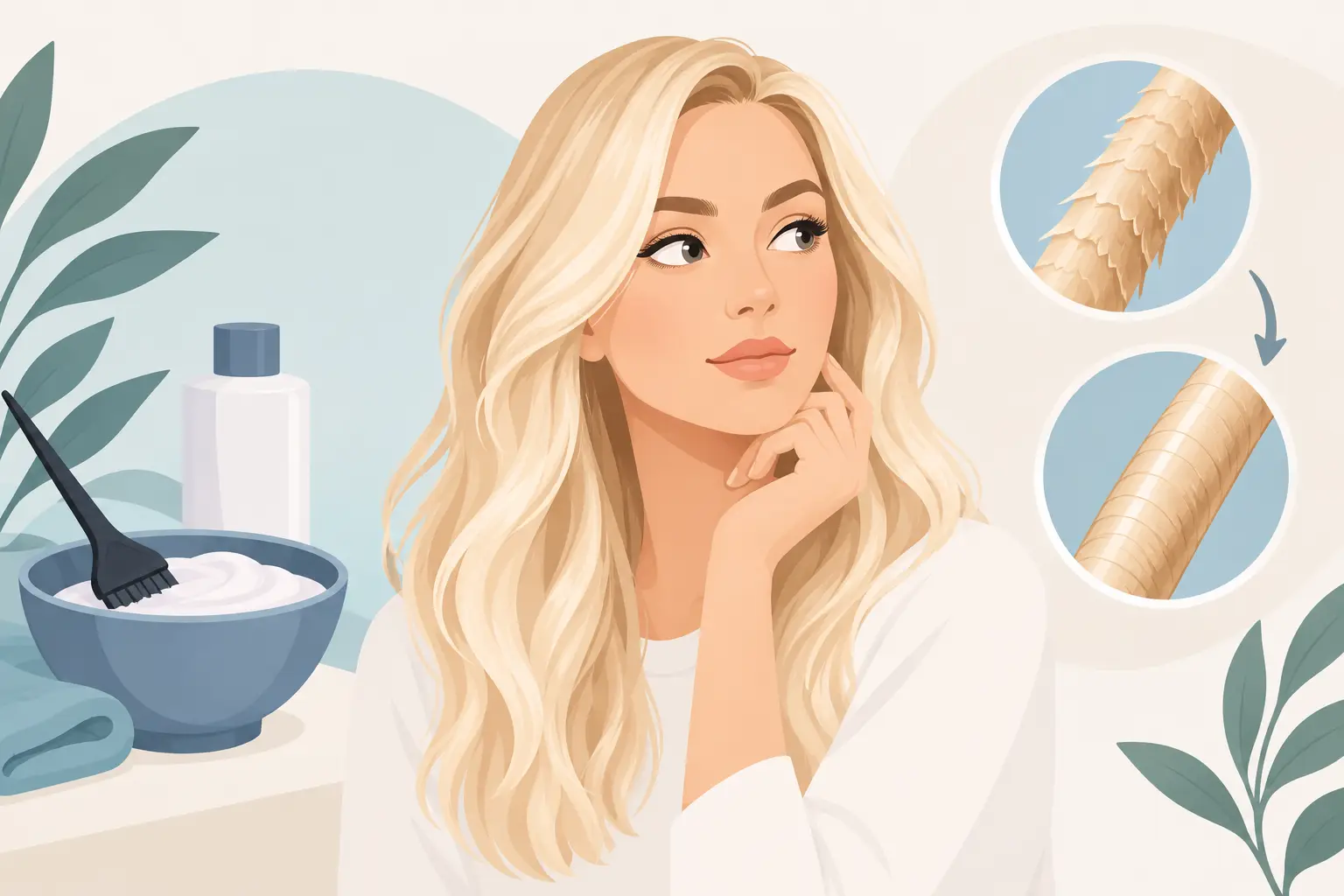
A bright, fresh blonde can feel like an instant reset, but the question behind every dramatic colour change is a sensible one: does bleach damage hair? Bleach does alter the hair fibre, and that can lead to dryness, roughness and breakage when the process is rushed, repeated too often or followed by the wrong home care. It does not, however, mean beautiful blonde hair is off limits. With skilled colour work, realistic timing and thoughtful maintenance, you can enjoy a luminous result while protecting the hair you have.
At RHair & Beauty, every lightening service begins with understanding your hair history, your desired finish and what your hair can comfortably achieve. Beauty that feels like you should never come at the cost of hair that no longer feels healthy.
Does bleach damage hair at a chemical level?
Yes. Bleach works by opening the hair cuticle and breaking down the natural pigment inside the hair shaft. This is how dark hair can become caramel, honey, beige or a clean, cool blonde. Because the process changes the internal structure of the fibre, bleached hair is naturally more vulnerable than untreated hair.
As pigment is lifted, the hair can lose some of its natural moisture, smoothness and elasticity. The cuticle may not lie as flat, which is why lightened hair can feel drier, catch more easily when brushed or appear less shiny without the right care. The more lift required, the more considered the service needs to be.
Damage is not simply about whether bleach has been used. It is about the condition of the hair before the appointment, the strength of the lightener, how long it processes, previous colour history, heat styling habits and what happens after you leave the salon. A gentle lift from a healthy natural base is very different from taking previously coloured dark hair to an icy blonde in one sitting.
What bleach damage can look and feel like
Healthy lightened hair should still feel soft, move naturally and hold a polished finish. It may need more moisture than virgin hair, but it should not feel impossible to manage. When the hair is overprocessed, the warning signs are usually clear.
You may notice a rough, straw-like texture, a lack of shine, excessive tangling or ends that snap when you brush or style. Hair that stretches when wet but does not spring back can be showing reduced elasticity. In more severe cases, breakage creates uneven, wispy lengths around the crown or ends, making the hair appear thinner even when the scalp is healthy.
Brassiness is often blamed on damage, but the two are not exactly the same. Warm tones can return as toner fades or as underlying pigment is exposed, especially in darker natural hair. While porosity can make toner fade more quickly, brassiness alone does not always mean the hair is damaged. A professional assessment can identify whether you need a gloss, a treatment, a trim or a more gradual lightening plan.
Why previous colour matters so much
Box dye, old highlights, permanent colour and even some smoothing services can all affect how hair lightens. Colour does not simply lift away in neat layers, and previously coloured hair can react unpredictably. Trying to force an immediate result can create uneven bands, unnecessary stress and compromised ends.
This is why an honest colour history is part of excellent salon care. Tell your colourist about every colour, toner, keratin treatment, henna or at-home experiment you can remember. It gives your stylist the information needed to select the safest technique and create a plan that respects your hair’s limits.
The safest way to go lighter
The safest blonde is not always the palest blonde. It is the shade and placement that suit your features, lifestyle and current hair condition while keeping your lengths looking full, touchable and refined.
For some clients, fine foils placed with precision offer controlled lift and a beautifully blended regrowth. For others, balayage creates a softer, lower-maintenance result because much of the natural depth remains through the root area. A face-framing highlight can deliver a noticeable brightness without lightening every strand. These choices are not compromises – they are tailored colour strategies that can preserve strength and still create a stunning transformation.
A gradual journey is especially valuable if your hair is dark, previously coloured, fragile or already showing signs of dryness. Reaching your ideal blonde over several appointments gives the hair time to recover between services. It also allows your colourist to refine the tone at each stage, rather than chasing an unrealistic result in one long day.
A professional approach makes a visible difference
Application matters. Lightener should be placed strategically, monitored carefully and removed when the desired level is reached. Overlapping bleach onto previously lightened hair is a common cause of breakage, particularly during regrowth appointments. Skilled colourists work to target new growth and protect the fragile, already-lightened lengths wherever possible.
The right formulation matters too. Hair with delicate ends, stubborn dark pigment or a history of chemical services may need a different approach from healthy, untreated hair. A tailored service can include bond-supporting care, conditioning treatments and a finish that restores softness and shine. These steps do not make bleach consequence-free, but they can significantly improve how the hair copes with the process.
How to care for bleached hair between appointments
Your at-home routine is where the longevity of your colour and the condition of your hair are truly supported. Think of lightened hair as silk: it can look spectacular, but it responds best to a little extra care.
Choose professional shampoo and conditioner designed for colour-treated or damaged hair, and avoid washing more often than your scalp needs. Very hot water can leave hair feeling drier and may encourage your toner to fade sooner, so use warm water and finish with a cooler rinse if comfortable.
A weekly nourishing mask can help restore softness and improve manageability. If your hair is breaking or feeling overly stretchy, a targeted strengthening treatment may be more appropriate. Moisture and protein both have a role, but they are not interchangeable. Too much protein can leave some hair feeling stiff, while moisture alone may not address weakened strands. Your stylist can recommend the balance that suits your hair.
Heat protection is non-negotiable. Blow-dryers, straighteners and curling tools can compound the dryness created by lightening, particularly when used at high temperatures every day. Apply heat protectant before styling, keep tools at the lowest effective temperature and give your hair heat-free days where possible. A gentle detangling brush, a soft towel or microfibre wrap, and a loose braid for sleep can also reduce mechanical stress.
Purple shampoo can be useful for maintaining a cooler blonde, but it is not a daily cleanser for everyone. Overuse can make porous hair look dull, grab unevenly or feel dry. Use it as advised for your particular tone, and follow with moisture-rich care.
When to pause the bleach
There are times when the best colour decision is to wait. If your hair is snapping, feels gummy when wet, has suffered recent chemical overlap or is shedding more than usual, further bleaching may not be the right next step. The priority should shift to restoring condition, trimming compromised ends and building a realistic plan for future lightening.
You can still feel beautifully finished while giving your hair a break. A toner or gloss can refresh faded blonde, richer lowlights can add dimension, and a precision cut can make tired ends look instantly healthier. Styling, shine treatments and strategically placed colour can maintain your confidence without asking more of fragile hair.
Is bleach always the reason hair feels damaged?
Not necessarily. Bleach can be a major contributor, but daily habits often determine whether lightened hair thrives or struggles. Tight ponytails, frequent hot tools, chlorine, sun exposure, rough brushing, skipped trims and harsh at-home products can all take a toll. Extensions also require the right application, maintenance and removal to avoid added tension on delicate hair.
The good news is that a personalised routine can make a genuine difference. Hair cannot fully repair itself in the same way skin can, because the visible strand is not living tissue. Yet professional treatments, protective habits and regular trims can improve the way it looks, feels and behaves while preventing further damage.
A beautiful blonde should feel considered from the first consultation to the way your hair catches the light weeks later. If you are thinking about going lighter, start with an honest conversation about your hair goals, your colour history and the level of maintenance you can enjoy. The most confidence-building result is not just a brighter shade – it is hair that still feels like your own, only more luminous.